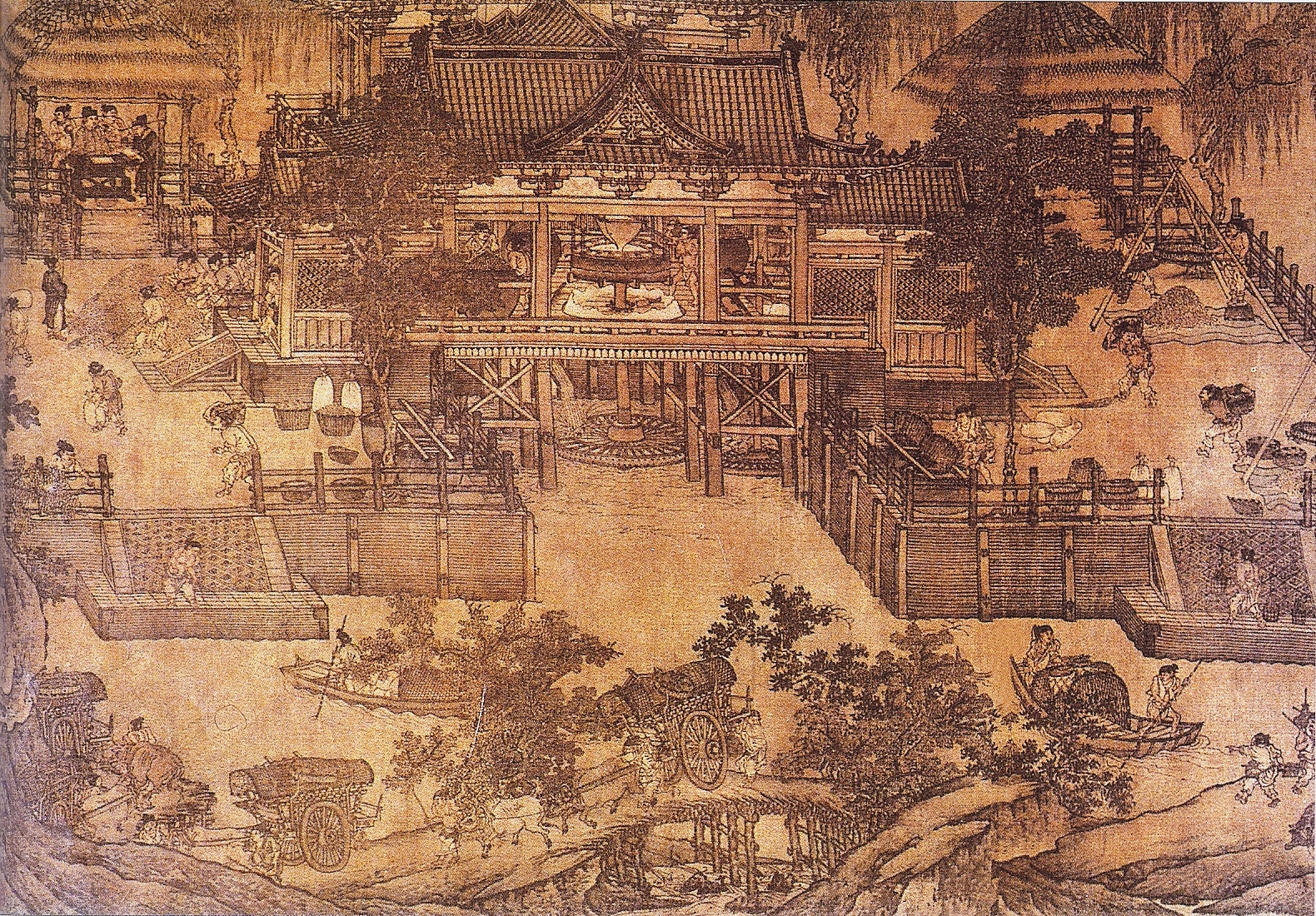
SONG DYNASTY
960 - 1279 AD
Key Notes
The Song Dynasty (960-1279 AD) marked a significant era in Chinese history, characterized by remarkable advancements in various fields, including music. Music during the Song Dynasty held a central place in society, permeating diverse settings such as imperial courts, religious ceremonies, banquets, and theatrical performances. It played a pivotal role in expressing emotions, entertaining audiences, and reflecting the refined cultural tastes of the time.
Among the most popular instruments during the Song Dynasty were the guqin, pipa, and zheng. The guqin, a seven-stringed zither, continued to be highly regarded and was associated with scholarly pursuits and introspection. The pipa, a pear-shaped lute, gained popularity for its versatility and expressive capabilities, often used in both solo and ensemble performances. The zheng, a plucked zither with a large resonating chamber, added melodic richness to Song Dynasty music. These instruments, along with the dizi (transverse bamboo flute) and the xiao (end-blown vertical flute), formed the foundation of the musical ensemble known as "wenchang" or "literati music," which was highly esteemed during the era.
The Song Dynasty produced a multitude of talented musicians who left a lasting impact on the music scene. Prominent figures included Lin Hejing, a renowned guqin player known for his skillful improvisations and refined interpretations of classical compositions. Su Dongpo, a celebrated poet, scholar, and statesman, was also an accomplished musician who played the guqin and composed his own musical pieces. Additionally, Liu Shui, a female musician, gained fame for her exceptional skills on the pipa. These musicians, along with others, contributed to the rich musical culture of the Song Dynasty, showcasing the artistic accomplishments and intellectual pursuits of the era.
It is important to note that the Song Dynasty witnessed the development of new musical genres, such as "ci" poetry set to music, which combined literary and musical arts. The era also saw advancements in musical notation systems, with the emergence of more detailed symbols and methods for recording musical compositions. Furthermore, the influence of regional folk music, such as the "jiangnan sizhu" ensemble from the southern regions, added diversity and distinctive local flavors to the Song Dynasty's musical repertoire. The music of the Song Dynasty represents a significant chapter in Chinese cultural history, reflecting the refined aesthetics and artistic achievements of the time.